Outdoor Pizza Ovens in Providence, RI
The pizza oven is the appliance people research alone at midnight, weeks before they call anyone about a kitchen. It is also the add on most often underestimated: an oven is heavy, it gets extremely hot, and where it sits and what it sits on are structural questions, not decorating ones. This page covers oven types, fuel, foundations, and cost, with HomeGuide 2026 putting a pizza oven at $1,200 to $6,000 before the stand and installation details that make it permanent.
No Providence area builder publishes a real pizza oven page, which is a shame, because the oven buyer is the most motivated researcher in the whole outdoor kitchen market. Here is the page that buyer is looking for.
Call (401) 357-0136Get a straight answer and a written quote
Three Kinds of Oven
Kit ovens
A kit provides the dome and floor pieces, insulation, and chimney parts, assembled on a stand you build or buy. Kits are the entry point for a permanent oven: real refractory performance at the lowest cost, with the stand, the curing, and the finish work on you or your builder. Kit quality varies widely, mostly in insulation, which is what decides how long the oven holds pizza heat between firings.
Prefab ovens
A prefab oven arrives as a finished unit, countertop size up to full floor standing models, set onto a stand or into the island run. Countertop units keep the project light and can even start life on a sturdy cart or counter. Full size prefab ovens still weigh enough to need a real stand and footing plan. Prefab is the speed choice: days instead of the weeks a masonry build takes to assemble and cure.
Full masonry ovens
A masonry oven is built on site, brick or refractory castable over a form, insulated and finished in stone or stucco to match the kitchen. It is the heaviest, slowest, and most permanent option, and the one that becomes the visual center of the yard. It is also a genuine structure: footing below frost, a stand engineered for the load, and a curing schedule measured in days of small fires before the first pizza night.
The Stand and Footing Are the Real Project
A mid size masonry oven and its stand can weigh well over a thousand pounds, concentrated on a few square feet. That load cannot sit on patio pavers over sand. It needs a footing or a slab designed for it, frost protected like the island's, and a stand, usually block, built to the oven's footprint with wood storage below if you burn wood. Prefab ovens lighten the math but do not erase it. Getting the base right is most of the installation cost that surprises people, and it is also the part that decides whether the oven is still level and crack free in ten years.
Heat sets the other placement rules. The oven mouth radiates serious heat, the chimney needs clearance from overhangs, fences, and trees, and the cook needs standing room and a landing surface beside the mouth for peels and finished pies. Placement is a design exercise, not a delivery detail.
Wood or Gas
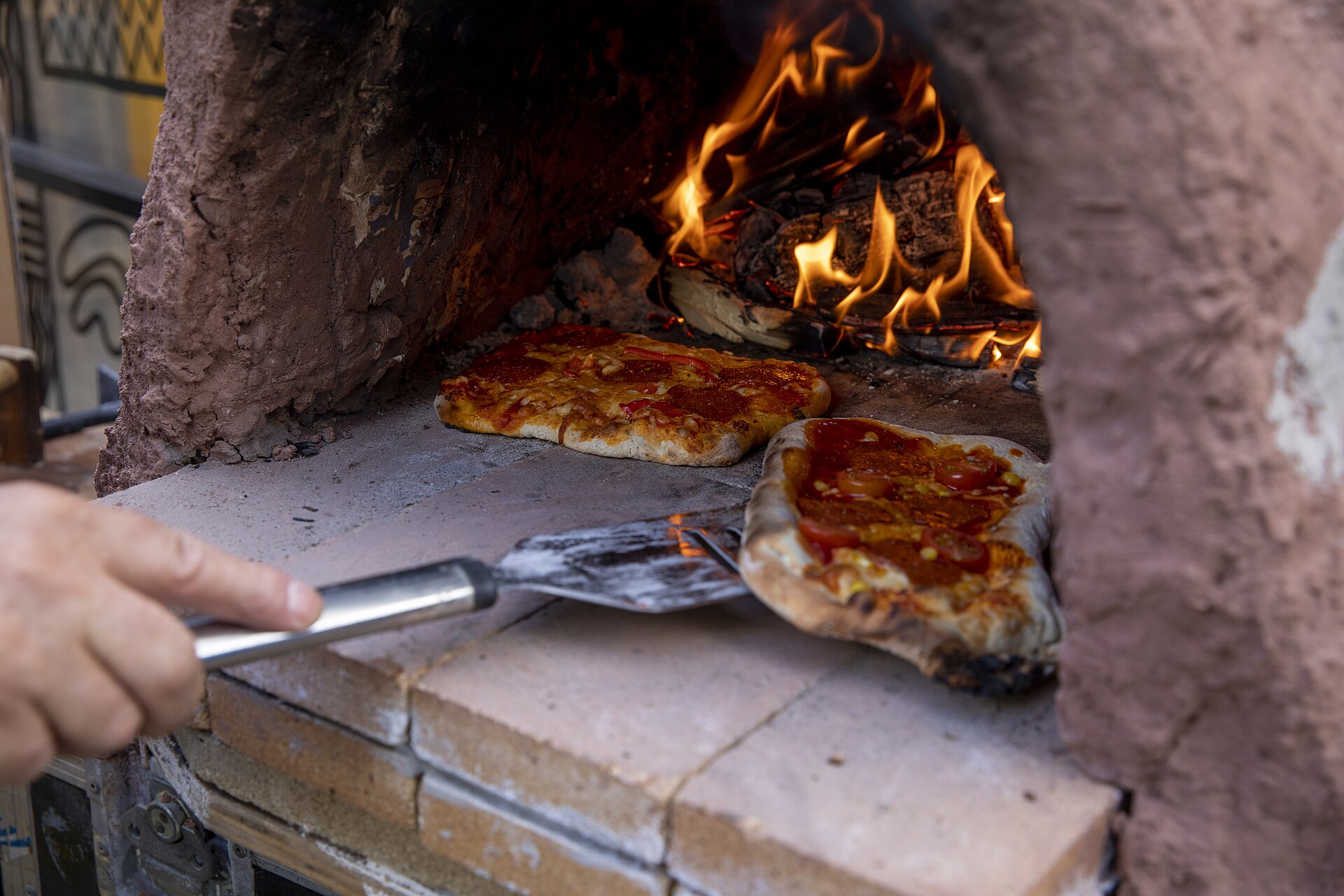
Wood fired ovens reach the highest floor temperatures and give the classic blistered crust and faint smoke flavor. They take time: a typical oven needs 45 minutes to an hour or more of firing to saturate the dome and floor, and the cook manages the fire through the session. Gas ovens heat with a burner, hold temperature with a dial, and skip the fire tending, at some cost to the top end heat and the ritual. Dual fuel ovens exist and suit households honestly divided on the question. Choose based on how you will cook on a weeknight, not on your best Saturday intentions.
The Oven Inside the Kitchen Plan
An oven built into the kitchen design shares the island's masonry crew, footing work, and finish materials, and its landing counter is planned beside the mouth. Added later, it usually takes its own stand at the end of the patio, which can look just as good, provided the footing and clearances get the same respect. Either way, tell the kitchen designer the oven is coming, even if it is phase two. The custom kitchens page explains how phasing protects exactly this kind of addition.
Request an Outdoor Kitchen Quote
Common Questions
How much does an outdoor pizza oven cost installed?
HomeGuide 2026 puts the pizza oven itself at $1,200 to $6,000, from kits and countertop prefab units up to large prefab and masonry ovens. Installed cost adds the stand, footing, finish work, and any gas service for gas or dual fuel models. A masonry oven on a block stand is a small structure, and its installed total reflects that. The quote names the oven and the structure as separate lines.
Wood fired or gas pizza oven?
Wood reaches the highest temperatures and gives the classic crust and flavor, with 45 minutes to an hour or more of firing before cooking and fire tending during it. Gas heats and holds temperature with a dial and far less effort, with somewhat lower top end heat. Dual fuel models split the difference. Choose by how you will cook on an ordinary weeknight, not a holiday.
Does a pizza oven need its own footing or stand?
A full size oven, yes. Masonry ovens with stands can weigh well over a thousand pounds on a small footprint, which needs a frost protected footing or engineered slab and a stand built for the load. Small countertop prefab ovens are the exception, needing only a sturdy, heat safe surface rated for their weight. Placing a heavy oven on ordinary pavers invites settling and cracking.
Can a pizza oven be part of the outdoor kitchen island?
Yes. Ovens are commonly built into the end of an island run or on their own stand adjoining it, with a landing counter beside the mouth for peels and finished pizzas. The island structure and footing are designed for the oven's weight and heat from the start. Retrofitting an oven into a finished island is harder, which is why ovens belong in the design conversation early, even as a later phase.
How long does a wood fired oven take to heat up?
Plan on 45 minutes to an hour or more of steady firing for a full size oven to saturate the dome and floor to pizza temperature, with larger masonry ovens at the longer end. The mass that takes time to heat is the same mass that holds heat for hours of cooking afterward. Small countertop ovens heat faster and hold less. The ritual is part of the product for wood burners.
Does a pizza oven need a permit or a chimney clearance?
The chimney needs clearance from overhangs, fences, and trees, following the oven's requirements, and a gas or dual fuel oven needs permitted gas work like any gas appliance. A masonry oven is a permanent structure and can fall under local building rules, and wood burning can be subject to town rules. Both are verified for your address at design time, before the oven's spot is final.
Pizza Night, Built Properly
One call covers oven type, fuel, and the stand and footing math for your yard.