Outdoor Kitchen Materials Guide for Rhode Island
Rhode Island is a hard school for materials. Freeze and thaw cycles pry at every joint, road salt rides the air near the bay, summer sun bakes south facing counters, and then January tests whatever is left. Materials that headline showrooms in mild climates fail here on a schedule. This guide compares the real choices for countertops, cabinets, and frames, coastal versus inland, with cost and upkeep side by side, and it goes deeper on purpose: this is the one topic a local competitor partly covers, and partly is not enough for a structure you expect to outlive its grill twice over.
The short version fits on an index card. Counters: granite or porcelain slab. Cabinets: marine grade polymer or stainless, 316 near salt water, 304 acceptable inland. Frames: concrete block or steel, never wood. Footings: below the frost line. Plumbing: built to drain down. The rest of this page is the why, the costs, and the exceptions.
Call (401) 357-0136Get a straight answer and a written quote
Countertops Compared
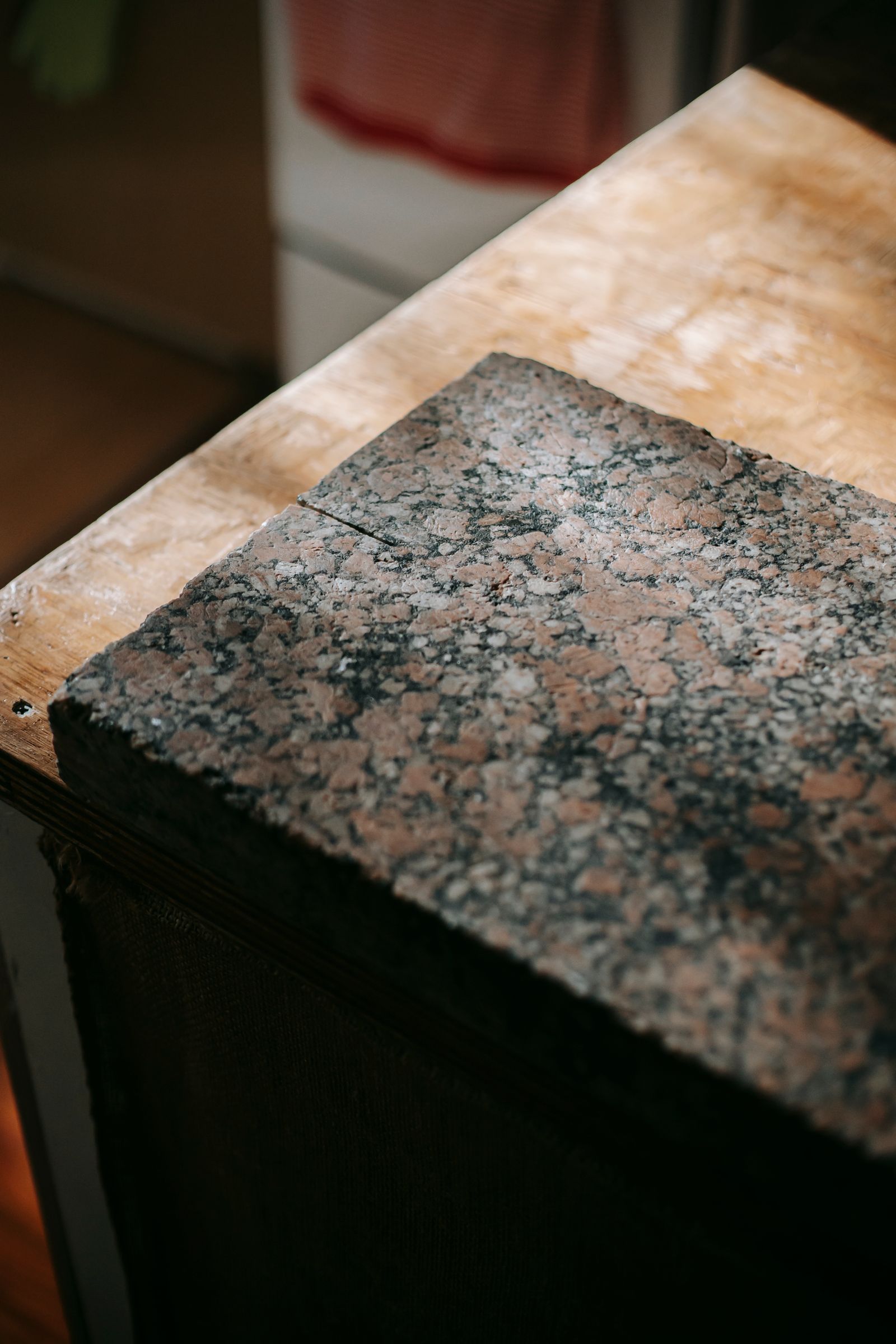
Granite earns its default status honestly. It comes out of the ground in New England's own climate, it takes a hot pan without complaint, and its failure mode outdoors is mostly neglect of a ten minute sealing chore. Porcelain slab is the legitimate challenger, especially for long seating runs and modern designs, with the caveat that fabrication and edge work need a shop that knows the material. Quartz is where this guide is bluntest: however it performs in a kitchen indoors, its makers generally do not rate it for outdoor installation, and sun discoloration claims fill the forums for a reason.
| Material | Outdoor verdict in Rhode Island | Cost and upkeep |
|---|---|---|
| Granite | Proven. Hard, heat tolerant, shrugs off freeze and thaw. | Mid to upper counter pricing. Seal on schedule, roughly yearly, an easy homeowner task. |
| Porcelain slab | Excellent. Non porous, UV stable, large formats suit long runs. | Upper pricing, specialist fabrication. Almost no upkeep, no sealing. |
| Engineered quartz | Avoid outside. Generally not rated for outdoor use, can discolor in sun, resin binders dislike temperature swings. | Showroom pricing that buys a shorter outdoor life. The classic expensive mistake. |
| Concrete | Possible with the right mix, sealer discipline, and a builder who knows it. | Mid pricing, highest upkeep: sealing is mandatory and cracks are a character trait some owners accept. |
| Tile over backer | Budget route. Lives or dies on the grout and the base movement. | Lowest counter cost, highest repair rate in freeze and thaw. |
Cabinets: Polymer and Stainless, and the 304 Versus 316 Question
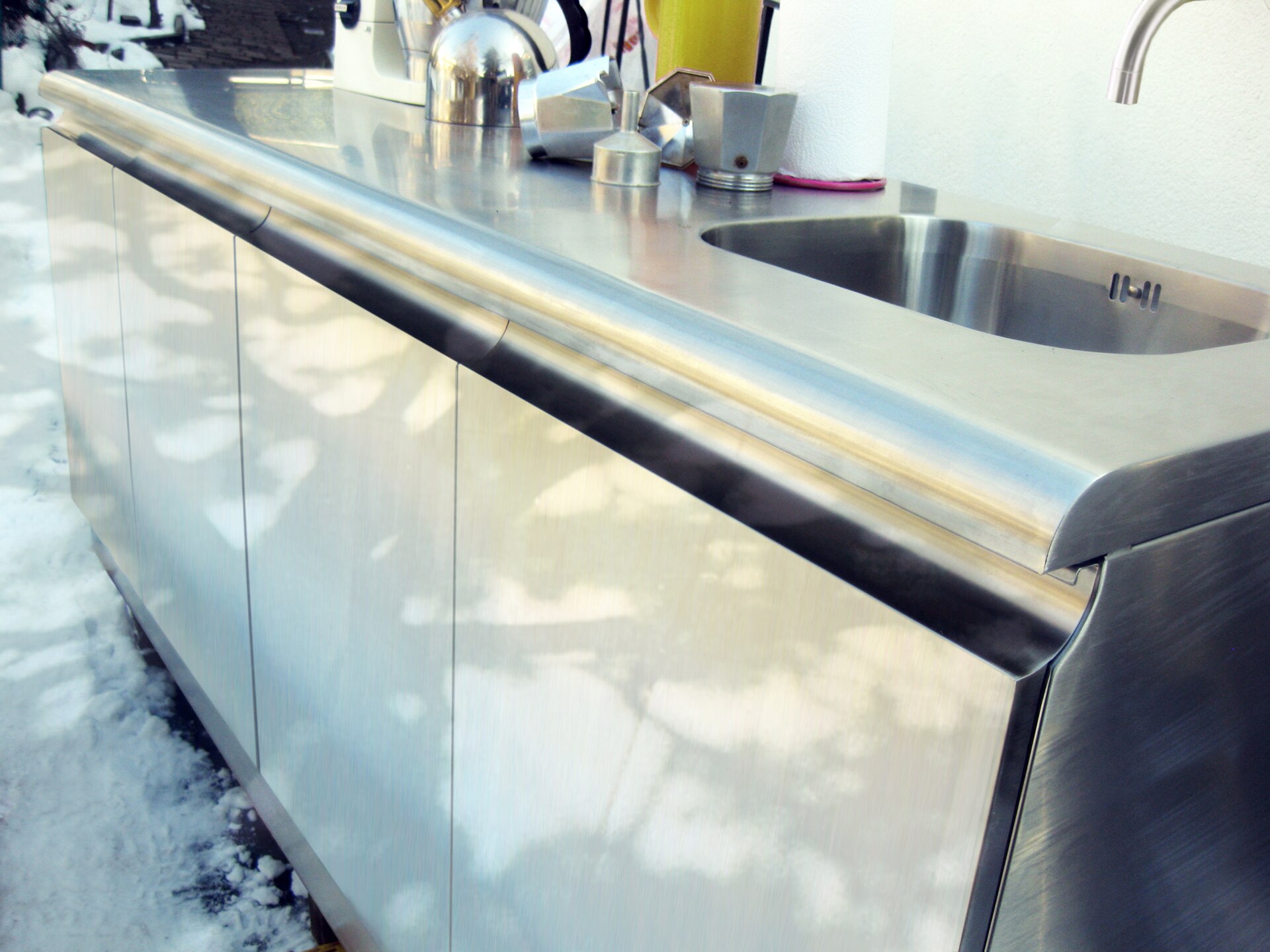
Outdoor cabinets live in weather that indoor cabinetry never meets, so the field narrows to two families. Marine grade polymer, HDPE, is the boat material: it does not rot, swell, or rust, it hoses clean, and it comes in colors that survive sun. Stainless steel is the commercial kitchen material, in two grades that matter here. Grade 304 is the standard stainless of most appliances and cabinets, and inland, away from salt air, it serves well. Grade 316 adds molybdenum, which resists the chloride pitting that salt air causes, and near Narragansett Bay and the coastal ponds it is the correct specification, not an upsell.
The practical rule for this metro: homes within sight or easy smell of salt water, much of Warwick, the Riverside side of East Providence, and the bay shore, should price 316 stainless or polymer. Inland Providence, Cranston, Pawtucket, and Johnston homes can use 304 without courting tea staining and pitting. Either way, painted or powder coated ordinary steel and any wood cabinet belong indoors.
Frames and Footings: the Invisible Decisions
The island frame holds moisture against itself for twenty years or it does not, and that is the whole frame question. Concrete block, mortared and finished in stone veneer or outdoor rated stucco, is the traditional answer and still the benchmark for a permanent build. Steel stud framing with cement board is the lighter modern answer, faster and straighter, finished the same ways. Wood framing is the failure the trade keeps relearning: it wicks moisture, swells and shrinks with the seasons, and takes tile and stucco finishes apart from inside.
Under the frame, masonry needs frost protected footings: Rhode Island frost reaches roughly three feet and more in a hard winter, and a footing above the frost line rides the heave that cracks finishes and throws counters out of level. This is unglamorous money, underground, and it is the difference between a kitchen and a kit. The patios page covers how the footing and the patio base work together.
Winterizing: the Annual Hour
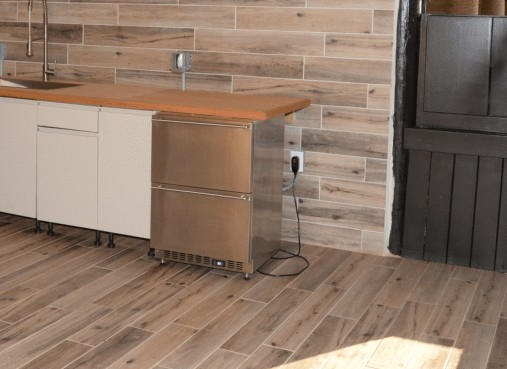
A Rhode Island outdoor kitchen closes for winter in about an hour, if it was built to. Shut the water off at the interior valves, open the low point drains and the faucets, drain the fridge line, and let gravity empty the system. Clean and dry the grill, cover the island or at least the appliances, and bring cushions and soft goods in. In spring the same system refills and pressure checks in minutes. Kitchens that fight winterizing were plumbed without shut offs or drains, which is a build decision, not a climate curse. Ask any builder to describe the drain down on your design before you sign, and hold the answer to the standard on this page.
Request an Outdoor Kitchen Quote
Common Questions
What is the best countertop for an outdoor kitchen in Rhode Island?
Granite for proven all around performance in freeze and thaw, heat tolerance, and easy upkeep with roughly yearly sealing. Porcelain slab is the equal alternative, non porous and UV stable, at upper pricing with specialist fabrication. Both survive Rhode Island indefinitely when installed well. The choice between them is budget, look, and run length, not durability.
Why not quartz countertops outside?
Engineered quartz is a stone and resin composite, and the resin is the problem outdoors: makers generally do not rate it for exterior use, sunlight can discolor it, and freeze and thaw temperature swings stress the binder. It is an excellent indoor material being asked to do an outdoor job. Granite and porcelain do the same design work outside without the warranty and fading questions.
304 or 316 stainless steel, does it matter here?
It matters within reach of salt air. Grade 316 contains molybdenum and resists chloride pitting, so homes near Narragansett Bay and the coast, much of Warwick and bay side East Providence, should specify 316 or choose polymer cabinets. Grade 304 is the standard material and performs well inland in Providence, Cranston, Pawtucket, and Johnston. The map, not the showroom, decides.
What are outdoor kitchen cabinets made of?
Two weather worthy families: marine grade polymer, HDPE, which does not rot, swell, or rust and hoses clean, and stainless steel in 304 or 316 grade. Both are built for exterior exposure. Ordinary wood cabinets and painted steel belong indoors, where the climate is controlled. Cabinet choice follows your distance from salt water and the look you want, granite topped islands carry either well.
How do I winterize the sink and fridge lines?
Close the interior shut off valves, open the low point drains and faucets, and let the lines empty by gravity, including the refrigerator line. Then clean the grill, cover the island or appliances, and store soft goods indoors. A kitchen plumbed with accessible shut offs and drain points winterizes in about an hour. If yours has neither, have a plumber add them before the first hard freeze.
What materials should I avoid in a freeze and thaw climate?
Engineered quartz counters, wood island framing, wood or painted steel cabinets, and tile counters over flexible bases. Each fails by the same mechanism: moisture and temperature movement working on a material that cannot take it. The safe palette is short on purpose: granite or porcelain tops, polymer or stainless cabinets, block or steel frames, and frost protected footings under all of it.
Materials Matched to Your Map Pin
One call prices the right grades for your distance from the water, not the showroom defaults.